October 8, 2026
A Time for Everything
“He has made everything beautiful in its time. He has also set eternity in the human heart; yet no one can fathom what God has done from beginning to end.” Ecclesiastes 3:11
Ecclesiastes 3:11 is one of the most popular Bible verses in the world. Clearly, its popularity is not incidental. The whole passage is a beautiful reminder that God is the One who ordains everything that happens under heaven, reminding us once again of His sovereignty over this world, but also our lives.
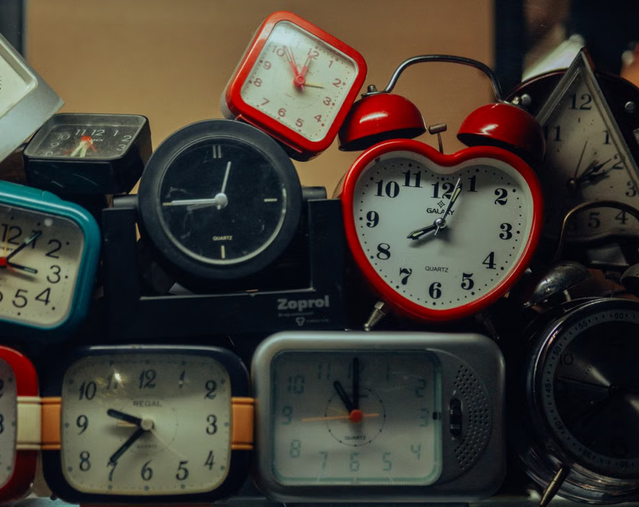
The message of this passage, I think, is especially more relevant given today’s way of living. It feels like a cliché to say that we are living in a time (pun not intended) where everything is so connected and instantaneous, the boundaries of time are blurred, and ultimately, this transforms our relationship with time as well.
And so, as we come back to this passage, I hope that we can gain some wisdom that can help us appreciate the time that God has designated in our lives
Godly wisdom recognises and appreciates the rhythms of life
The passage opens with the statement that “there is a time for everything, and a season for every activity under the heavens” (v.1). Before we get further deeper into the passage, there is already something that we can learn from this brief sentence: The more we abide in the wisdom that God gives for His people, the more we recognise and appreciate the seasons and rhythms of lives.
Have you ever noticed how much things are becoming 24/7 these days? You can go out at 1AM and see some stores and restaurants that are still open. Even some gyms these days are open 24/7.
And it is not just that. As our technologies improve and we are becoming more connected globally, the more we lose our sense of time. For example, some people are working at midnight because they are working for a company with different time zones. Today’s lifestyle is so much different compared to say, in the early mid 1900s, where people worked when the sun was out, and went back home to rest when night came.
I’m not undermining the good things that come from these changes (I am grateful that when I’m hungry at home and don’t have food, I could just go to Macca’s and grab something at midnight). But this lack of boundaries makes us feel that we can do what we want when we want. There is no particular season for anything.
On the contrary, the Teacher in this passage reminds us that God has designated seasons and rhythms of life, and He has made everything “beautiful in its time” (v.11). And a wise person respects this truth. They don’t try to do anything they feel like at any given moment.
A time for everything
Recognising that there is a time for everything doesn’t stop as a head knowledge, but it shapes the way we approach living. When we look closely at the world today, we may notice that what people avoid the most is the ugliness of life. For some, they may try to remove waiting in their lives, opting for instant gratification and answers. For others, avoiding the ugliness of life may mean living a completely happy and positive life.
Yet when we look at this passage, we notice that what appears to be ugly and unpleasant in our lives are actually part of the seasons God has appointed for men. Just as there is “a time to dance”, there is also “a time to mourn” (v.4). There is “a time to search and a time to give up” (v. 6). From verse 2 to 8, the Teacher listed opposing life seasons side by side, as if trying to tell the reader that although the ‘ugly’ seasons that we are in may feel useless to us, they are truly not, because God has a beautiful and good purpose for them.
How does this apply in our life?
It should free us from the compulsive desire to control our lives. We don’t try to get rid of any pain or any tension in our lives in order for us to live a comfortable life. Instead, it gives us a comfort knowing that truly, whatever happens in our lives, or even in this world, and yes, that includes the good and the bad, are not outside the control of God. He is still in control.